Our Location
Palakkad, Kerala India

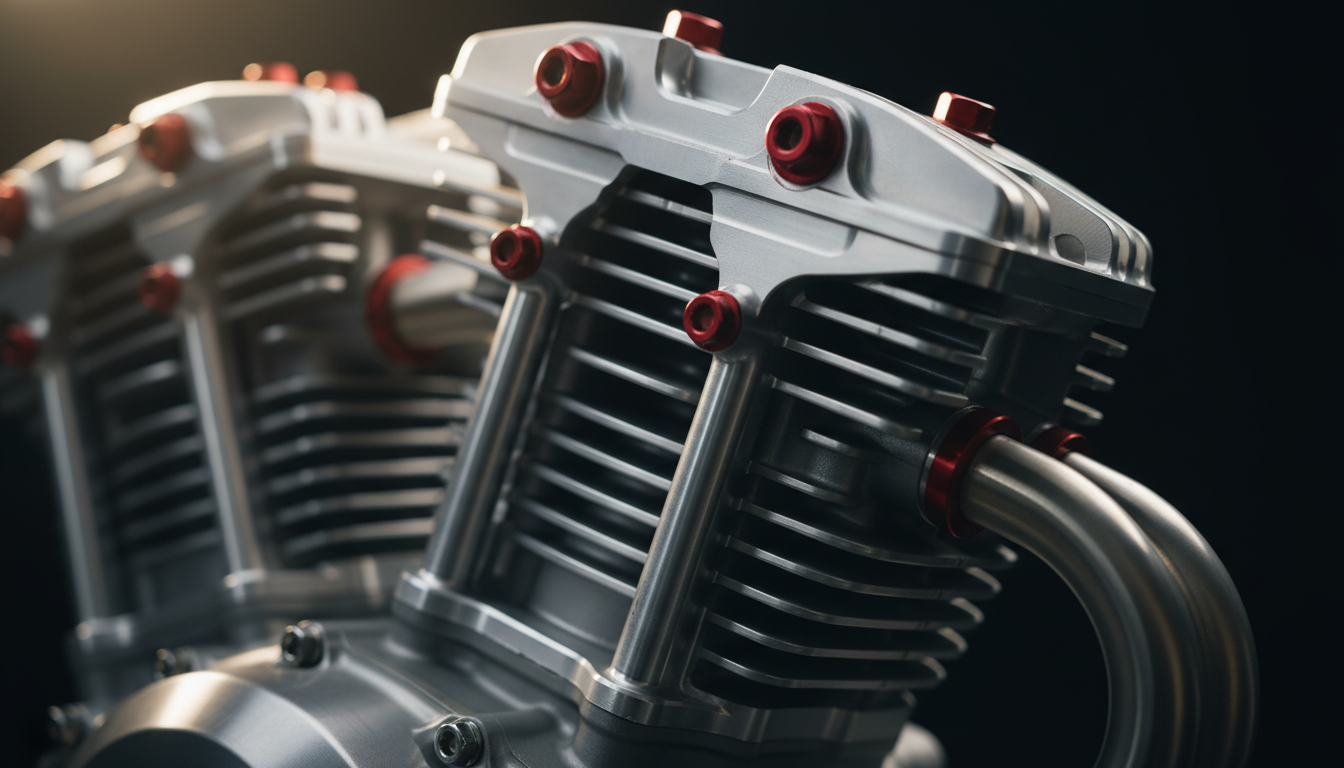
You might obsess over your exhaust note, chase the perfect suspension setup, or spend hours researching brake pads — but nothing affects your engine’s longevity and performance more intimately than the oil circulating through it. And yet, most riders treat oil as an afterthought: grab the cheapest semi-synthetic on the shelf, dump it in, forget about it.
For motorcycle enthusiasts who genuinely care about their machines, that approach is unacceptable. This guide breaks down everything you actually need to know — viscosity grades, additive chemistry, oil types, and how to match them to how you actually ride.
Here’s something most people don’t realize: you cannot use car engine oil in a motorcycle with a wet clutch. Automotive oils contain friction modifiers (specifically molybdenum disulfide compounds) designed to reduce internal friction for fuel economy. That’s great for a car engine, but in a wet-clutch motorcycle, those same modifiers cause clutch slip — degraded feel, inconsistent engagement, and long-term clutch wear.
Always look for oils labeled JASO MA or JASO MA2. This Japanese Automotive Standards Organization certification guarantees the oil meets wet clutch compatibility standards. MA2 is the stricter spec, suited for higher-performance applications. If you’re running a KTM Duke, a Triumph Street Triple, or anything with a sportsbike-derived engine, you want MA2.
“The wrong oil doesn’t just affect performance — it accelerates wear in ways you won’t see coming until it’s already too late.”
That number on the bottle — 10W-40, 15W-50, 20W-50 — tells you how the oil behaves across temperatures. The W stands for “Winter,” and the number before it describes the oil’s cold-start flow rating. The number after represents viscosity at operating temperature (100°C).
Cold Start (W rating)
10W
Operating Temp Viscosity
40
Best For
Sport / Daily
Indian Climate Suitability
High
In India’s climate — hot summers, humid monsoons — most modern 250cc-to-1000cc motorcycles run well on 10W-40 or 10W-50. Older, air-cooled engines like Royal Enfield’s classic cast-iron units often prefer thicker 20W-50 to compensate for wider manufacturing tolerances.
Refined directly from crude, mineral oils are cheaper and perfectly adequate for low-stress, low-RPM engines — think commuter bikes under 150cc doing city speeds. They break down faster under heat and shear stress, so change intervals need to be shorter: every 2,000–3,000 km for best results. For a performance motorcycle, mineral oil is a compromise you probably don’t want to make.
A blend of mineral base stock with synthetic additives, semi-synthetics offer improved thermal stability and oxidation resistance over pure mineral oils. They’re a solid middle ground for bikes like the Honda CB300R, Bajaj Pulsar RS200, or KTM 390. Change intervals can stretch to 4,000–5,000 km, depending on your riding conditions.
Engineered from the ground up, full synthetic oils offer superior film strength, dramatically better shear stability, and consistent viscosity across a wide temperature range. If you’re pushing your bike hard on a track, canyon-carving, or regularly redlining, full synthetic is not optional — it’s necessary. Change intervals: 5,000–7,000 km, or as specified by your manufacturer.
⚠️
Pro Tip: Oil change intervals in manufacturer manuals are written for average riders doing average things. If you’re doing spirited canyon runs or regular track days, cut those intervals by 30%. Heat and high RPM shear oil faster than any clock.
Alongside JASO, look for the API (American Petroleum Institute) rating. Current designations for petrol engines run from SL through the latest SM and SN ratings. Higher letters indicate updated additive packages that handle modern engine demands better. For 2015-onwards motorcycles, API SN is ideal. Older bikes are fine with SM.
Forget calendar-based changes. Go by kilometers and conditions:
There’s no universal “best” — but there are clear right answers for specific use cases. For high-revving sport bikes (CBR650R, Z900, Street Triple), Motul 7100 10W-40 or Shell Advance Ultra 10W-40 are consistently excellent. For naked middleweights in Indian conditions, Castrol Power1 Racing 4T 10W-40 performs well at a competitive price point. For RE Classics and older parallel-twins, Motul 3000 4T 20W-50 mineral is the pragmatic choice.
What matters most isn’t the brand — it’s that you’re using the correct viscosity, the right JASO rating, and changing it on schedule. Get those three things right and your engine will reward you with years of trouble-free performance.
Explore motorcycle performance parts, lubricants, riding gear, and accessories at MotoLab.