Our Location
Palakkad, Kerala India

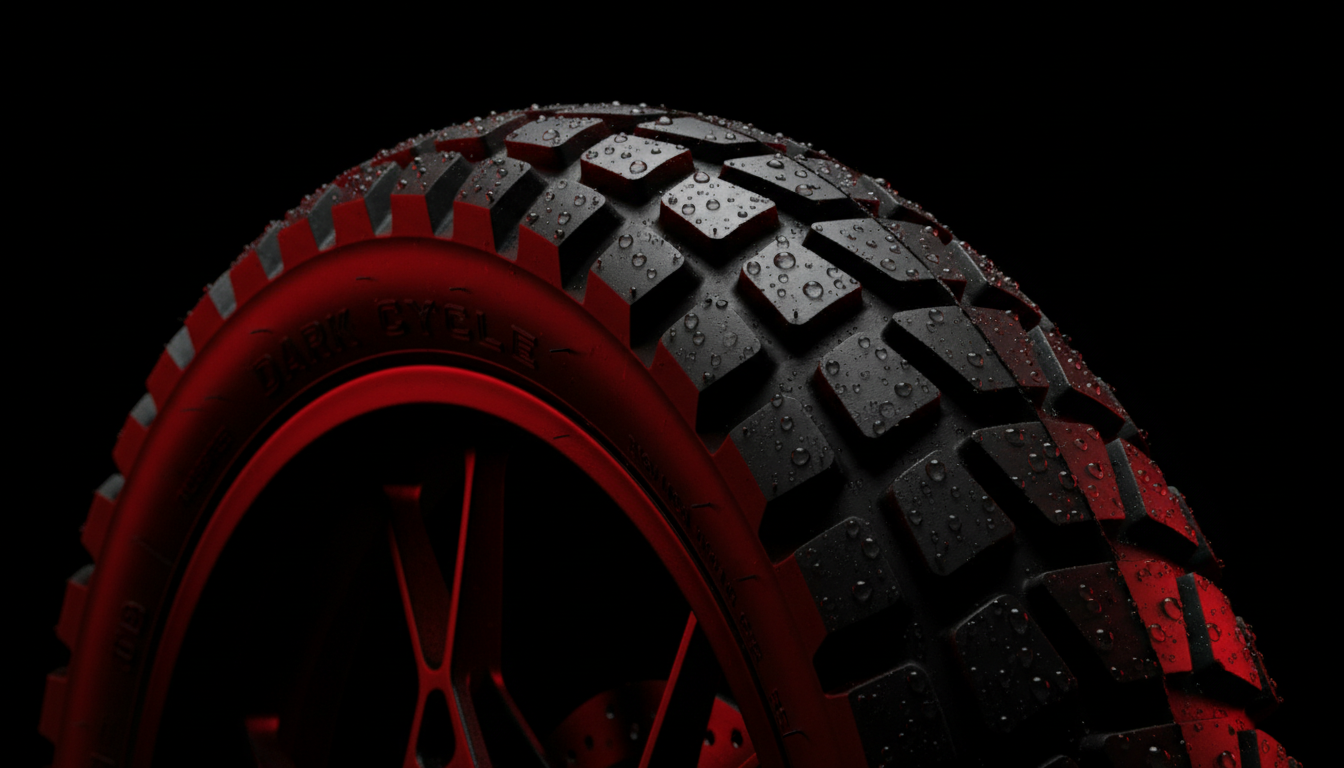
Tires are the only thing between you and the asphalt. Every input you make — throttle, brake, lean — communicates through that 40–50cm² contact patch. Yet most riders make tire decisions based on price, aesthetics, or what their mate recommended. That’s a mistake that can genuinely cost you either your lap time or your life.
This guide is for riders who want to understand what they’re actually buying when they choose a tire — the compounds, constructions, profiles, and how all of it translates to real-world behavior on Indian roads and beyond.
Before compound, before brand, you need to understand structure. Modern motorcycle tires are built in two primary configurations:
Cord layers run at 30–45° angles to the direction of travel. Bias tires have stiffer sidewalls, which makes them more resistant to damage on rough roads and more predictable at low speeds. Most cruisers and classic bikes run bias tires. They’re durable, affordable, and well-suited to relaxed riding styles. The downside: they generate more heat at high speeds and offer less outright grip than radials.
Cord layers run perpendicular (90°) to the direction of travel, with a belt package stabilizing the tread. Radials have more flexible sidewalls, better high-speed stability, lower rolling resistance, and superior heat dissipation. If you own anything with sportsbike DNA — naked, supersport, hypernaked — you should be on radials.
“Your suspension tune is only as good as the tires you’re running. A premium setup on budget tires is money wasted.”
Tire compound is where things get genuinely interesting — and genuinely complicated. The rubber compound determines how the tire interacts with road surface chemistry, how quickly it warms up, how it performs at temperature, and how long it lasts.
One compound across the entire tread. Simpler to manufacture, more consistent behavior, but always a compromise — harder for durability means less grip at the edges; softer for grip means faster center wear from straight-line acceleration.
Different compounds at the center and shoulders. A harder center compound resists wear under acceleration and braking; a softer shoulder compound maximizes lean-angle grip. Most modern sport tires use this approach — Michelin’s Power range, Pirelli’s Diablo Supercorsa, Bridgestone’s S22, and Dunlop’s SportSmart series all employ some variation of multi-compound design.
Sport Touring
50K+ km
Hypersport
6–10K km
Warm-up Distance
3–5 km
Optimal Temp (sport)
80–100°C
Take a tire marked 120/70ZR17. Here’s what each section tells you:
Load index follows separately. A load index of 58 means each tire can carry up to 236 kg. For motorcycles carrying a passenger regularly, verify that both front and rear load ratings accommodate the combined weight of bike, rider, pillion, and luggage.
You want a sport-touring or sports tire — something like the Michelin Road 5, Pirelli Angel GT II, or Bridgestone T32. These offer excellent wet weather performance, respectable mileage (15,000–20,000 km), and enough outright grip for spirited riding without demanding a warm-up lap. In Indian conditions with mixed road quality, this category is often the sweet spot.
Michelin Power 5, Pirelli Diablo Rosso Corsa II, or Dunlop SportSmart TT. You’ll sacrifice longevity (expect 6,000–8,000 km) for a compound that operates properly at track temperatures. Don’t use full slicks on public roads regardless of what you see online — they’re useless below 80°C.
Mileage and wet-weather confidence are priorities here. Michelin Pilot Road 4 GT and Bridgestone T32 are benchmarks. You’re looking for even wear profiles, strong aquaplaning resistance, and predictable behaviour on degraded surfaces.
⚠️
Critical: Never mix radial and bias-ply tires on the same bike. The handling characteristics are fundamentally incompatible and create dangerous instability, especially under braking.
Correct tire pressure is arguably more important than tire brand. Under-inflated tires run hot, wear unevenly at the shoulders, squirm under load, and increase stopping distances. Over-inflated tires reduce contact patch size, create a harsh ride, and cause premature center wear.
Check cold tire pressure before every ride. Use the manufacturer’s recommended pressures as a baseline, then adjust based on feedback. Track riders often run 1–2 PSI lower front and rear to increase contact patch size, but this only works when tires are at operating temperature and requires careful monitoring.
India’s roads demand more from tires than most markets. Potholes, debris, temperature extremes from 5°C winter morning commutes in the north to 45°C summer afternoons in Rajasthan, plus monsoon flooding — a tire that performs well in European conditions doesn’t automatically translate here.
Puncture resistance matters more here than anywhere. Look for tires with reinforced carcasses if you’re doing significant city riding. Run tubeless setups wherever possible — a tubeless tire with a puncture gives you warning; a tubed tire can fail catastrophically. And always carry a tire repair kit and mini compressor. Not because you expect a flat, but because when it happens, you’ll be extremely glad you planned for it.
Explore motorcycle performance parts, lubricants, riding gear, and accessories at MotoLab.