Our Location
Palakkad, Kerala India

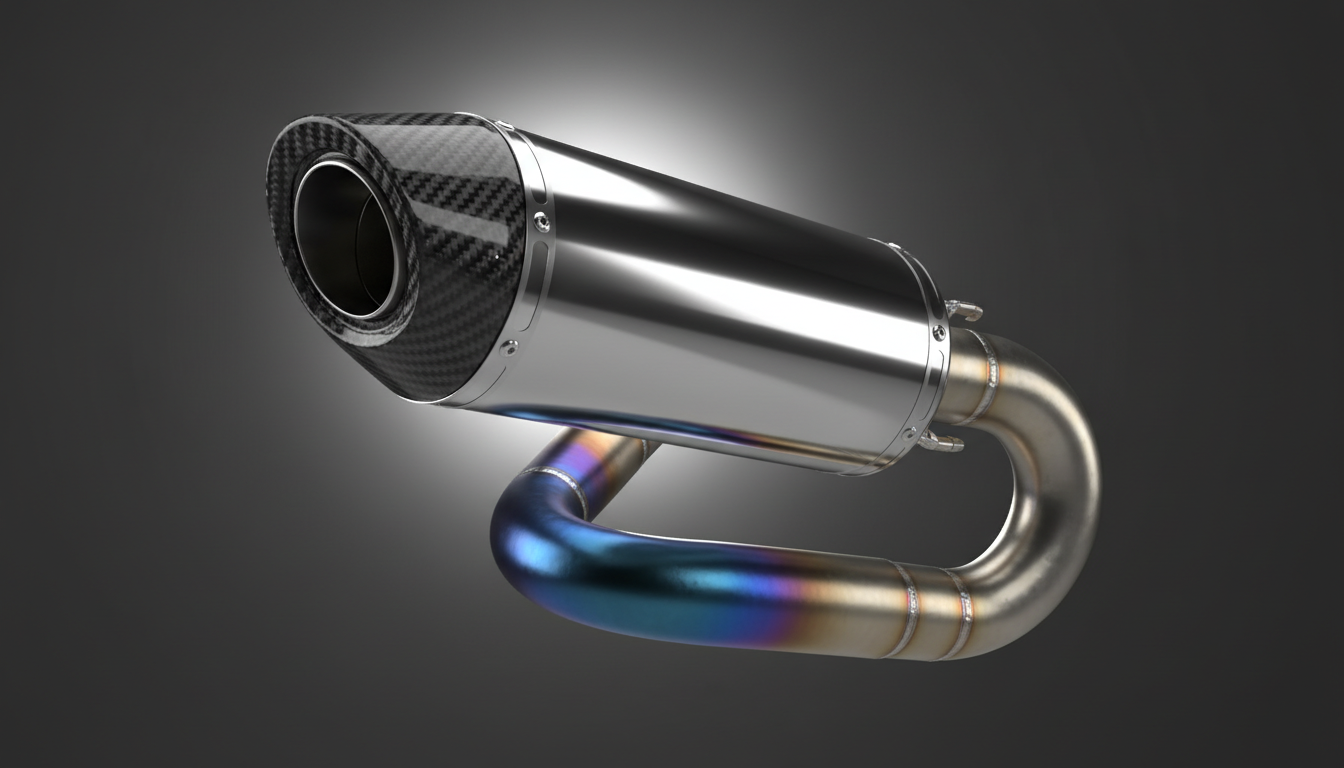
Few motorcycle modifications are more tempting — or more misunderstood — than an aftermarket exhaust system.
The appeal is obvious.
Better sound.
Lower weight.
Sharper styling.
More performance.
And a good aftermarket exhaust absolutely delivers on those promises — if you know what you’re buying.
The problem is that the market is also flooded with cheap, badly engineered systems that sound exciting for about ten minutes before they:
This guide is for riders who want to understand the engineering behind motorcycle exhaust systems, choose the right setup, and get the most from the upgrade.
You can explore motorcycle performance parts and riding accessories at MotoLab.
Your engine is essentially an air pump.
It pulls in air and fuel, combusts the mixture, and pushes exhaust gases out. The speed and efficiency with which those gases exit directly affects how efficiently fresh air enters the combustion chamber.
That’s why exhaust design has such a major impact on engine performance.
The key principle here is called scavenging.
When exhaust gases exit the cylinder, they create pressure waves inside the header pipes. A properly designed exhaust uses those waves to help pull remaining gases out of the combustion chamber and improve cylinder filling.
Done correctly, this improves:
Header pipe length and diameter matter enormously.
Tune them correctly for your engine’s displacement and RPM range, and the exhaust can significantly improve performance exactly where you want it.
“A slip-on makes you smile. A full system with a proper remap makes your bike feel fundamentally different.”
A slip-on replaces only the muffler section.
The stock:
all remain untouched.
Power increase:
1 hp−3 hp
Weight reduction:
1 kg−3 kg
For riders mainly chasing sound, aesthetics, and a lighter feel, a quality slip-on is usually the smartest option.
A full system replaces:
This is where serious performance gains happen.
A properly engineered full system paired with ECU tuning can transform how a motorcycle feels.
Power increase:
8 hp−15 hp
Weight reduction:
4 kg−9 kg
OEM exhaust systems on motorcycles like the Kawasaki Z900 or Triumph Street Triple can weigh between 8–12 kg.
A titanium aftermarket system can reduce that to under 4 kg.
That’s a huge difference in:
Most stock OEM exhausts use coated mild steel.
Cheap aftermarket systems often use it too.
Problems:
Avoid cheap mild-steel aftermarket exhausts whenever possible.
High-quality aftermarket systems commonly use:
Contains titanium stabilisers for superior resistance to heat-cycle fatigue.
This is motorsport-grade material.
Brands like Akrapovič, SC-Project, and Arrow commonly use premium stainless alloys in their systems.
Titanium offers one of the best strength-to-weight ratios available.
Advantages:
A titanium exhaust changes more than just performance.
It changes the entire feel of the motorcycle.
Less weight improves:
Premium titanium systems can cost:
₹60,000−₹1,50,000
But for serious riders and track-focused builds, the investment can absolutely be worth it.
Carbon fibre is usually used only for muffler canisters, not headers.
It cannot withstand header temperatures safely.
Benefits:
A titanium header combined with a carbon fibre canister creates one of the lightest and best-looking exhaust setups available.
Modern motorcycles use fuel injection controlled by an ECU.
That ECU is calibrated around the stock exhaust system.
When you dramatically increase exhaust flow, especially with a full system, the air-fuel balance changes.
Without tuning, this can cause:
That’s why ECU tuning is critical.
Common tuning solutions include:
A full system without proper tuning is incomplete.
Even slip-ons can benefit from fuel optimisation, especially on modern emissions-tuned motorcycles that already run lean from the factory.
Noise and emissions regulations in India are becoming stricter every year.
Using non-compliant exhaust systems on public roads can lead to:
Always ensure your exhaust system complies with applicable local regulations before installation.
Especially avoid:
A quality slip-on is usually perfect.
You get:
without major tuning complications.
A full stainless or titanium system paired with ECU tuning delivers noticeable gains in:
For maximum performance:
This is where every kilogram and every horsepower matters.
Custom stainless fabrication often works better than universal aftermarket systems.
Older engines have very specific geometry and tuning requirements.
Before installation:
Never reuse old exhaust gaskets.
That’s one of the fastest ways to create:
New titanium exhaust systems often develop blue-purple heat colouring after a few hundred kilometres.
That’s completely normal.
It happens because of heat cycling and oxidation at high temperatures.
In fact, many riders consider it one of the best-looking parts of a titanium system.
A good aftermarket exhaust does far more than change sound.
It changes:
But quality matters enormously.
A poorly engineered exhaust can actually make your bike slower, rougher, and less reliable.
Buy once. Buy properly.
Choose an exhaust designed for your motorcycle, tune it correctly, and the difference can completely transform the riding experience.
Explore motorcycle performance parts, lubricants, riding gear, and accessories at MotoLab.