Our Location
Palakkad, Kerala India

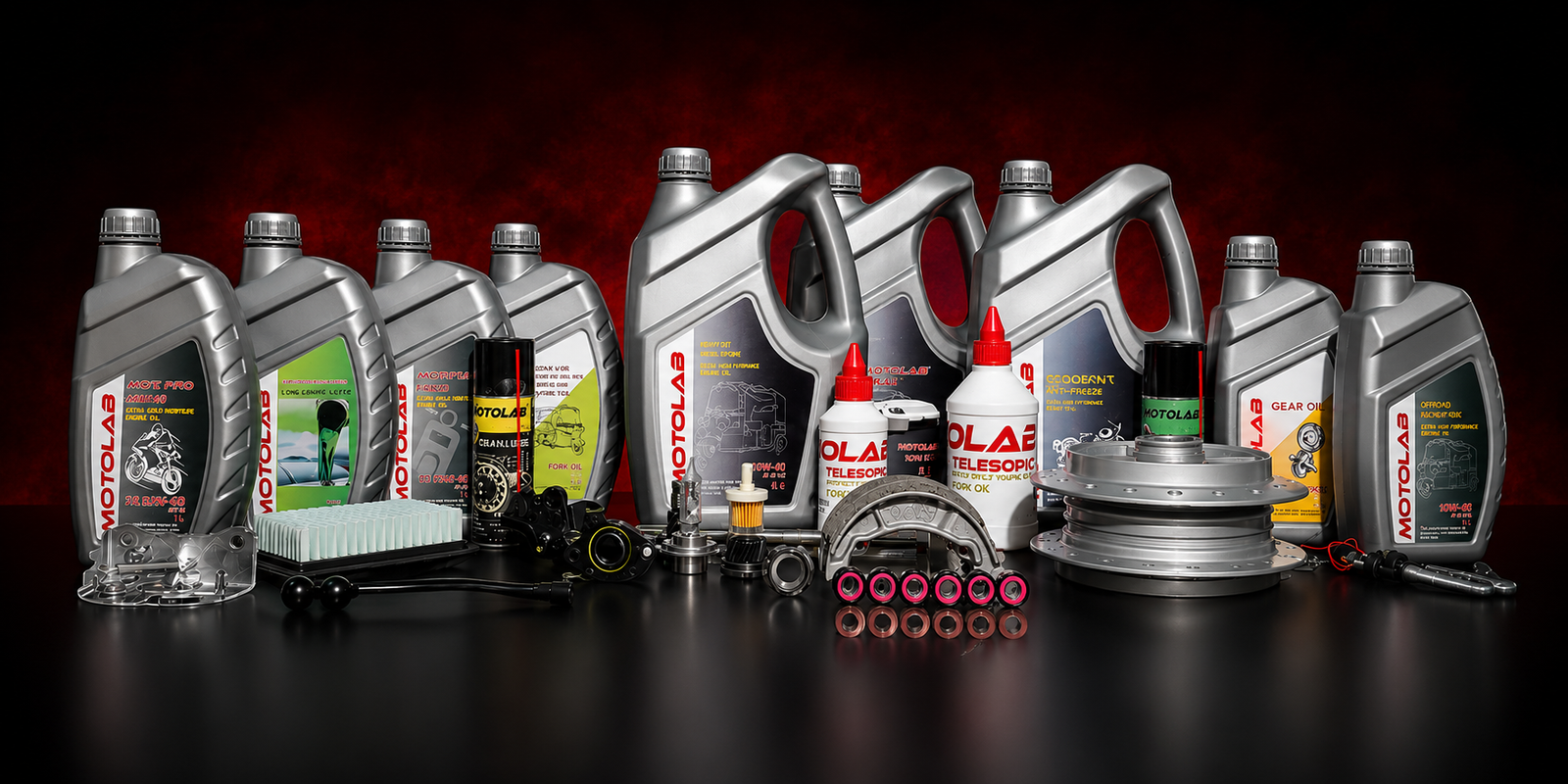
Most people hear the words mineral oil and synthetic oil all the time, but very few actually know what separates them.
The price difference is obvious.
The real difference inside your engine? That’s where things get interesting.
You can explore premium engine oils and lubricants at MotoLab.
Mineral oil starts as crude petroleum pulled from the ground.
It’s refined, cleaned, processed, and turned into engine lubricant. It has been around for decades and has powered millions of engines reliably.
There’s nothing inherently wrong with mineral oil. It still works perfectly well in many applications.
Synthetic oil is different.
Instead of simply refining crude oil, chemists engineer the molecules in laboratories to behave in very specific ways inside an engine.
The result is a lubricant that is:
In simple terms:
Mineral oil is like handmade bread from a local bakery. Every batch is slightly different depending on the ingredients, weather, and process.
Synthetic oil is like precision-engineered bread from a machine — every molecule is designed to perform consistently every single time.
That consistency is the real advantage.
Typical oil change interval:
3000 km−5000 km
Typical oil change interval:
10000 km−15000 km
Browse premium synthetic oils from brands like Motul, Shell, Castrol, and Liqui Moly.
Here’s something most drivers never think about:
The most damaging moment for your engine is not during highway cruising.
It’s the first 10 to 30 seconds after startup.
That’s when the oil needs to circulate immediately and create a protective film before metal components begin grinding against each other.
Cheap mineral oils usually take longer to flow during cold starts.
Premium synthetic oils circulate much faster.
That means:
Over years of driving, that difference adds up.
Not dramatically overnight.
But slowly and consistently.
If you regularly deal with:
then oil stability becomes extremely important.
Mineral oil begins oxidizing and breaking down faster under prolonged heat.
Over time, this creates sludge deposits inside the engine.
Synthetic oil resists oxidation far better. It maintains stable viscosity even when the engine has been running hot for hours.
That’s exactly why:
almost always recommend full synthetic oil.
These engines operate at higher temperatures by design.
A small naturally aspirated commuter vehicle may work perfectly fine on mineral oil.
A turbocharged performance engine? That engine was likely designed around synthetic lubrication from day one.
Semi-synthetic oil sits right in the middle.
It’s usually a blend containing:
Typically around 20–30% synthetic.
It offers:
For many everyday vehicles, semi-synthetic oil provides an excellent balance between protection and affordability.
Just avoid randomly mixing brands or viscosity grades unless recommended.
Not true.
You can switch between mineral and synthetic oil, although doing a proper oil flush first is usually recommended.
This myth started because older engines with worn seals sometimes developed leaks after switching to synthetic oil.
The oil didn’t cause the leak — it simply exposed existing wear.
Not exactly.
Synthetic oil contains stronger cleaning agents that remove sludge and deposits. Sometimes those deposits were masking worn seals or tiny leaks.
The synthetic oil simply revealed existing problems.
Generally true.
Full synthetic oil usually lasts significantly longer before breaking down.
Typical intervals:
That longer lifespan helps reduce maintenance frequency over time.
Not always.
Using the wrong viscosity grade can actually harm your engine, even if the oil is expensive.
Always follow your manufacturer’s recommended specification.
For example:
5W−30
or
10W−40
The correct specification matters more than marketing.
In these situations, mineral oil can still work perfectly well.
Older engines were often designed around it anyway.
In those cases, synthetic oil is usually worth every rupee.
Modern engines are built with tighter tolerances and higher operating temperatures. They demand better lubrication.
Yes, synthetic oil costs more per litre.
But it also:
Over large distances, the actual ownership cost difference is often much smaller than people assume.
In some cases, synthetic oil can even become cheaper overall once you factor in:
And in Indian driving conditions — with heat, traffic, dust, and stop-start usage — that added protection genuinely matters.
The best engine oil is not necessarily the most expensive one.
It’s the oil that:
That matters more than brand loyalty or marketing claims.
Good oil protects your engine.
Fresh oil protects it even better.
Explore premium engine oils, filters, lubricants, and maintenance essentials at MotoLab.