Our Location
Palakkad, Kerala India

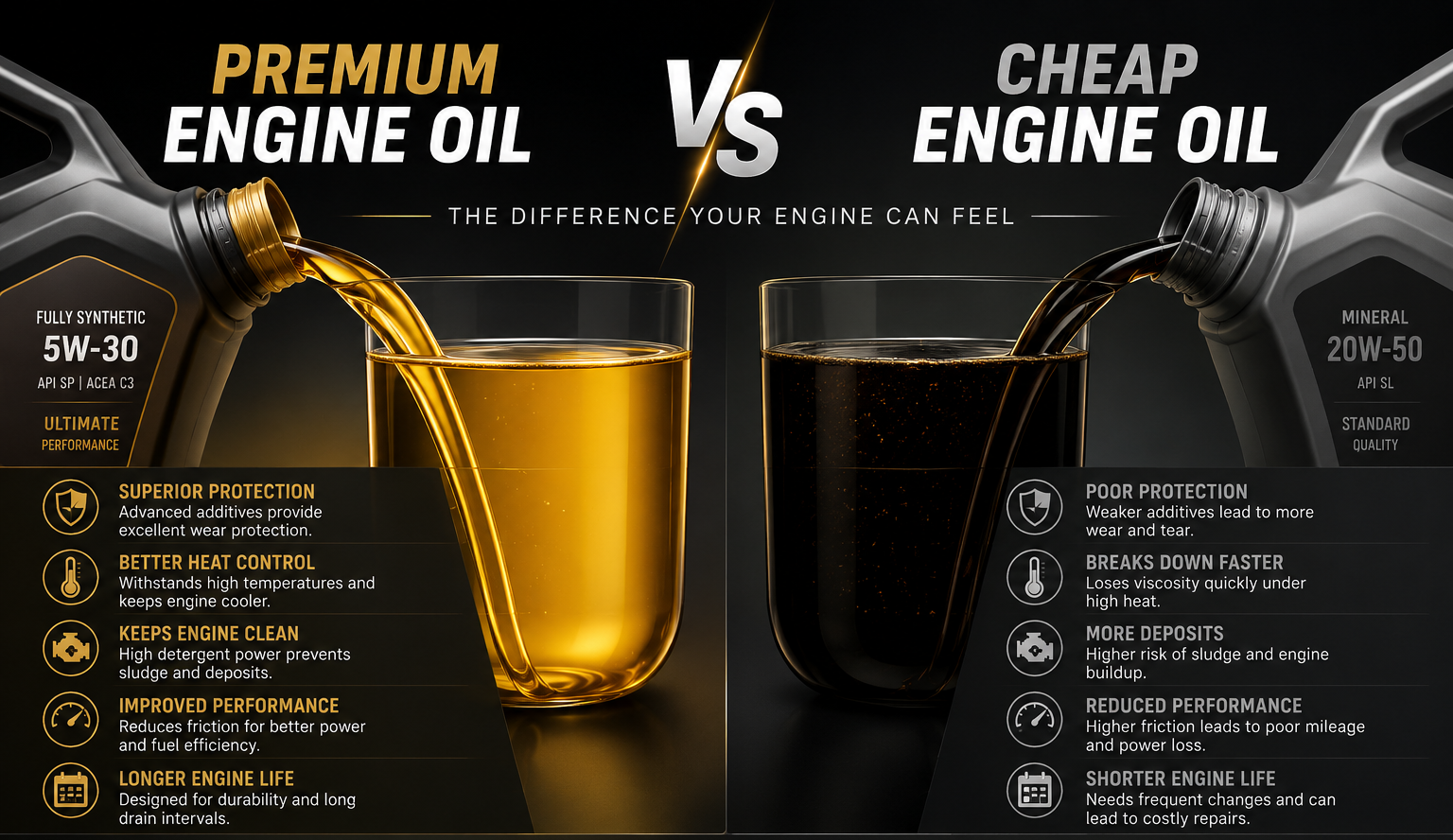
Most people only think about engine oil when it’s time for a service.
But engine oil is doing far more work than most riders and drivers realize.
Your engine has hundreds of metal components moving against each other at extremely high speeds. Without oil, those parts would destroy each other within minutes. Engine oil creates a thin protective film between moving surfaces, reducing friction, carrying away heat, and cleaning out microscopic particles of metal and carbon.
Simple enough.
But here’s where things get interesting: not all engine oils do these jobs equally well.
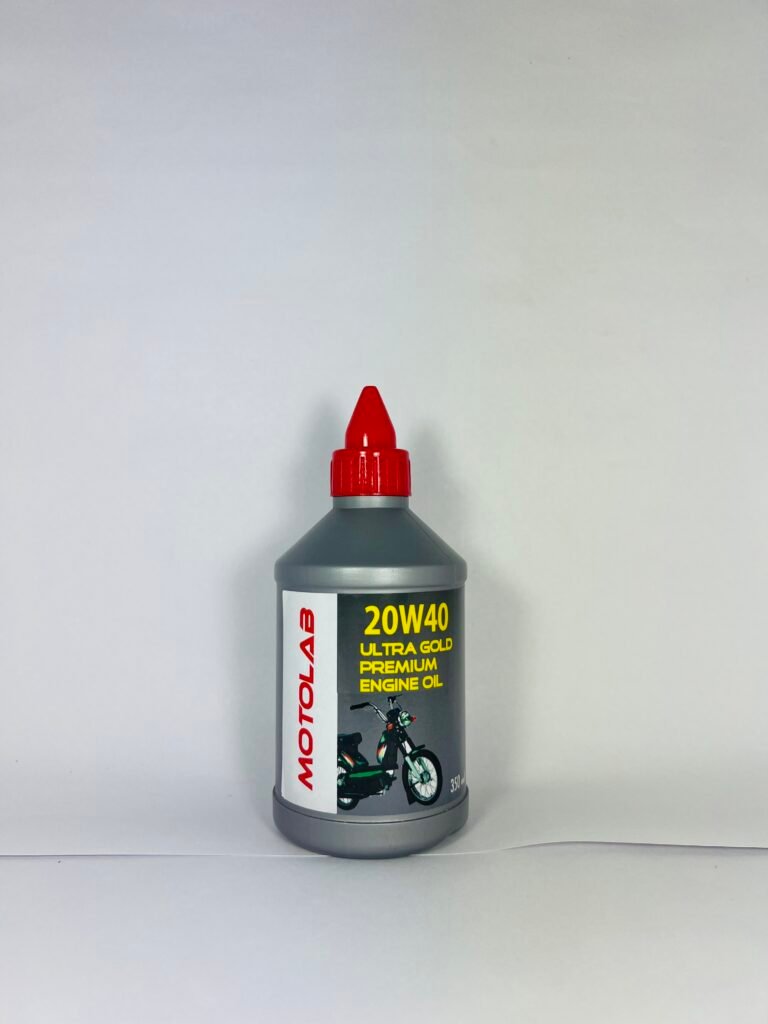
You can explore premium motorcycle engine oils and lubricants at MotoLab.
Engine oil has two main components:
This is the primary liquid that provides lubrication.
These are the chemicals that improve performance and protection.
Additives include:
Together, these determine how well the oil protects your engine over time.
Gets the basic job done:
Built for the long game:
The difference is not just branding.
Synthetic oils have a far more uniform molecular structure with fewer impurities. That allows them to:
That consistency matters more than most people think.
“A budget oil changed on time isn’t necessarily bad. A premium oil used far beyond its limit isn’t necessarily good.”
Oil quality matters.
But oil change discipline matters too.
Most engine wear does not happen while cruising on the highway.
It happens during the first 10–15 seconds after startup.
That’s when oil has not fully circulated yet. Metal surfaces are operating with minimal lubrication, especially during cold starts.
Cheaper, thicker oils usually take longer to reach critical engine components.
Premium synthetic oils flow much faster.
Even in lower temperatures, they circulate quickly and create protective lubrication almost immediately.
Over years of riding and tens of thousands of kilometres, this difference slowly adds up.
Not dramatically overnight.
But steadily.
Honestly? Probably yes — but it’s difficult to measure precisely.
There are too many variables involved:
What we can measure is oil degradation.
Premium synthetic oils maintain their protective properties significantly longer than cheap mineral oils.
Typical intervals:
As oil degrades, it loses viscosity, additive effectiveness, and heat resistance.
That’s when engine wear accelerates.
There are situations where budget oil genuinely makes sense.
Older engines with worn tolerances sometimes run better on slightly thicker mineral oil because it helps maintain oil pressure and seal minor gaps.
Counterintuitive, but true.
If your motorcycle or car:
then budget oil changed frequently may be perfectly acceptable.
If you urgently need oil and only local oil is available, use it temporarily and replace it properly during the next service.
Running low on oil is always worse than topping up with temporary oil.
If someone genuinely cannot afford premium synthetic oil but changes mineral oil consistently on schedule, the engine will usually remain fine in normal commuting conditions.
Consistency matters more than people realize.
Some engines are far less forgiving.
Premium synthetic oil is strongly recommended for:
These engines run:
Cheap oil in these engines can lead to:
A cheap oil change can eventually become an expensive repair bill.
There’s something even more important than the brand name:
The oil specification.
Always follow the viscosity and certification recommended in your owner’s manual.
For example:
5W−30
and API specifications like:
A cheaper oil that meets the correct specification is better than an expensive oil with the wrong viscosity or certification.
Your engine was designed around those specifications.
Ignore marketing.
Follow the manual.
Here’s the balanced answer.
If you own:
then premium synthetic oil is absolutely worth it.
The long-term protection, heat resistance, and stability justify the cost.
But if you own an older, simpler engine and maintain strict oil change intervals, decent semi-synthetic or mineral oil can still work perfectly fine.
The real engine killer is usually not cheap oil.
It’s neglected oil.
Change it on time. Every time.
Some older engines were built incredibly tough. Old commuter motorcycles and older Maruti engines, for example, could tolerate almost anything.
Modern engines are different.
They’re more powerful, more efficient, and built with much tighter tolerances.
That means they demand better lubrication.
Good engine oil is not just another consumable.
It’s one of the cheapest forms of long-term engine protection you can buy.
Explore premium engine oils, lubricants, filters, and motorcycle maintenance products at MotoLab.