Our Location
Palakkad, Kerala India

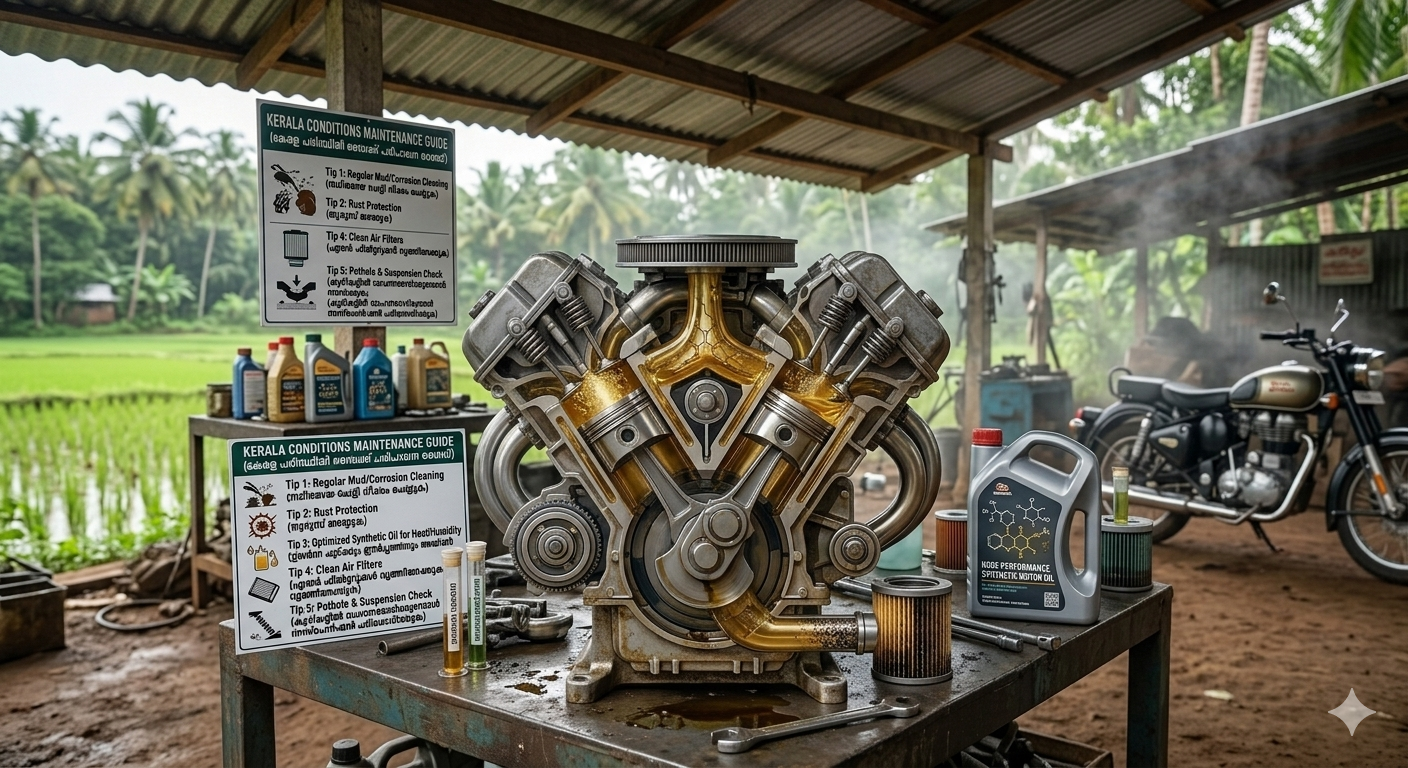
Let me tell you something about riding a bike in Kerala. It’s not just riding. It’s an adventure a guessing game and sometimes honestly a small prayer. You leave home thinking the road is fine. Three kilometres later, you’re dodging a fresh pothole the size of a cooking vessel. Then comes the rain. Then the mud. Then the narrow bridge with the autorickshaw that simply refuses to move.
Kerala roads are beautiful. But they are also brutal and if you don’t take care of your bike? The road will take care of it for you. Not in a good way.
This guide is for everyone the daily office commuter in Thrissur, the weekend rider heading to Munnar, the delivery guy who puts 80km on his bike before lunch. Whoever you are these bike maintenance tips for Kerala roads will save money, frustration and maybe one or two embarrassing breakdowns in the middle of NH 66.
Ask teen riders in Kerala when they last checked their tyre pressure. Eight of them will look away the other two will lie.
Here’s the thing Kerala roads are not flat. We have ghats speed bumps every 50 meters, flooded stretches and patches where the road just… disappears wrong tyre pressure on these roads doesn’t just affect your mileage. It affects your control especially in the rains.
“Tyre pressure is the single cheapest thing to maintain. And the single most skipped don’t be the rider.”
Most manufacturers say change the oil every 3,000 km or 3 months. In
Kerala? Does it sooner stop-and-go traffic in Kochi or Thrissur means your engine is running hot more often? The heat here is different. Combined with humidity, old engine oil breaks down faster.
Also, and this important if you’ve ridden through a flooded road, get your oil checked immediately. Water contamination in engine oil is a real thing. It happens more often than people admit. You’ll know something is wrong when the oil looks milky or light brown instead of dark amber.
This one isn’t optional
Kerala roads have surprise bends, sudden school zones, cows that walk out of nowhere and speed bumps painted the same colour as the road. Your brakes need to work perfectly every single time.
Disc brake pads should be replaced when they’re down to about 2mm. drum brakes need adjustment when there’s too much lever play. And brake fluid people forget this one entirely absorbs moisture over time. In a humid climate like Kerala’s brake fluid degrades faster. Change it every 12-18 months at least.
Important: if your brakes feel “spongy” or the lever goes too close to the handlebar, don’t ride. Don’t think I will check it tomorrow that tomorrow might be a rainy evening on the Palakkad highway. Get it fixed today.
A dirty, dry chain on Kerala roads? Recipe for disaster mud, rainwater and grime attack your chain constantly here. A poorly maintained chain not only reduces performance but can snap and a snapping chain at speed is dangerous.
Kerala roads have some of the worst potholes in south India. That’s not an insult. That’s just data. And while the roads are slowly improving mostly the punishment your suspension takes is real.
Many riders ignore suspension until it’s completely gone. By then riding feels like sitting on a wooden plank. Your fork seals might be leaking oil. Your rear shock might have lost its damping. These aren’t cosmetic issues. Bad suspension means bad control on uneven surfaces. Which is every road in Kerala after July.
The humidity in Kerala is legendary. And it’s not kind to metal or electrical connections. Rust shows up faster here than almost anywhere else in India. Exposed metal, battery terminals, wire connectors all of these corrode quietly.
Kerala is one of the most beautiful places in the world to ride a motorcycle. The backwater roads at dusk. The tea estate curves in Munnar. The coastal breeze on the Kollam highway. There’s nothing quite like it.
But the roads demand respect. And so does your machine
You don’t have to be a mechanic. You don’t need to do everything yourself. But you do need to know your bike, listen to it and take it seriously. Regular servicing at a trusted workshop basic checks at home and a little attention to the things mentioned above that’s genuinely all it takes.