Our Location
Palakkad, Kerala India

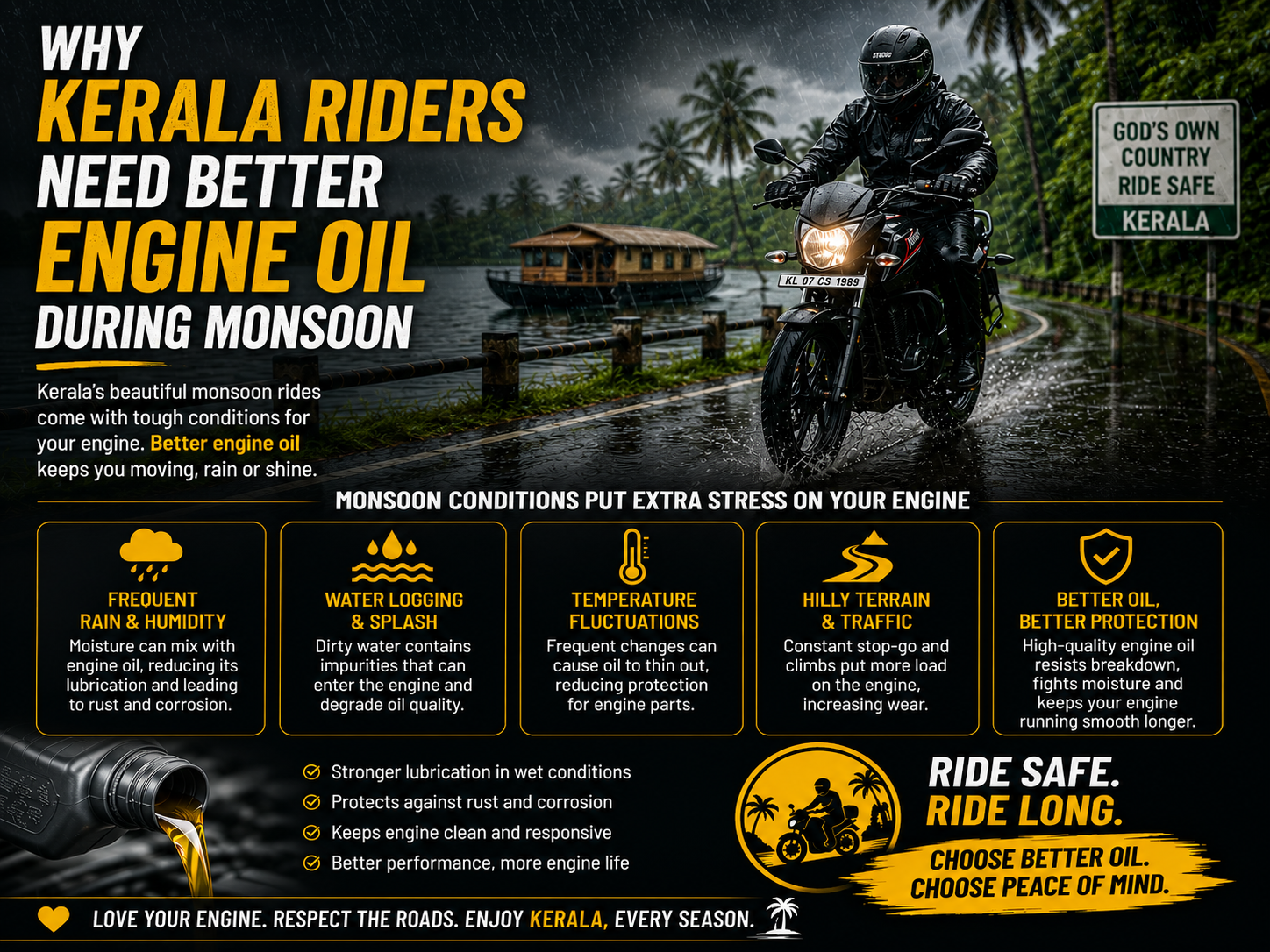
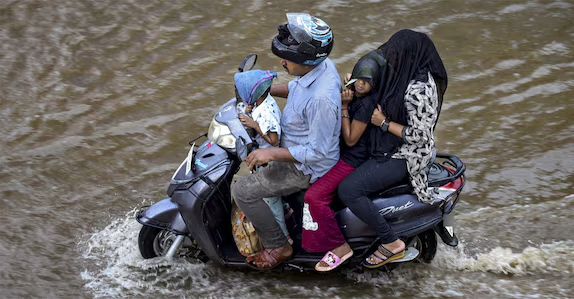
You know that feeling. It’s 7 in the morning. The road is half underwater. Your helmet visor is foggy your shoes are already soaked and you still have to get to work. That’s Kerala monsoon riding, it’s not dramatic it’s just Tuesday.
Most rider here think about rain gear, tyre grip maybe brakes. Fair enough but there’s something most people don’t think about at all what’s happening inside the engine while all of this is going on and honestly that’s where the real problem sits.
We’re not talking about a quick afternoon shower. Kerala gets somewhere between 2,500 to 3,000 mm of rainfall every single monsoon season. The humidity alone site above 90% for weeks at a stretch. Your engine whether you realise it or not is running inside a giant steam room for months.
When you ride through flooded roads, water doesn’t just splash the outside. Fine water vapour gets pulled into the crankcase breather systems. Over time this moisture mixes with the oil. And once that happens the oil starts to lose its protective layer and your engine parts start wearing out faster than they should.
“Monsoon in Kerala don’t just test your riding skills- it tests everything your engine is made of.”
Most people use whatever oils the mechanic suggests or whatever is available at the nearest shop. Usually, it’s a standard mineral or basic semi-synthetic. And look for most weather conditions, that’s fine. But Kerala monsoon is not most weather conditions.
Regular oils have lower viscosity stability. Meaning when temperature fluctuates say cool rain on a hot engine the oil thins out faster. When the oil gets too thin it can’t form the proper film between moving metal parts. Metal meets metal. That’s wear. That’s damage you can’t see until it’s already happening.
Nobody tells you this. You go for your regular service; they change the oil and that’s that. But three weeks into June, you’re already running on compromised lubrication and you have no idea.
A good full synthetic oil like a 10W-40 or 15W-50 maintains its viscosity much better across temperature swings. It resists moisture contamination longer. The additive package in quality synthetic includes better anti-corrosion, anti-oxidation and detergent properties, which helps keep the inside of your engine even when it’s working hard in humid conditions.
Some rider switch to full synthetic only for major bikes. But even on a 150cc daily commuter-the kind that sits in morning traffic on Thrissur swaraj round or Ernakulam bypass for 40 minutes-the engine stresses during monsoon is genuinely significant. The oil change interval, usually 3,000km for mineral oil, should probably come down to 2,000km or even 1,500km during peak monsoon months.
Browse synthetic motorcycle engine oils and premium lubricants at
Pull out the dipstick and check the oil’s colour and consistency before you ride once in a while during June august. If it looks cloudy or has a greyish tinge, that’s moisture mixing in. don’t wait for your scheduled service change it.
Here’s something mechanics in Kerala will quietly tell you: engine in this state tends to age faster than similar bikes in drier parts of the country. Not because people ride harder. Because the environment is just tougher on everything mechanical.
Rust on internal surfaces. Worn piston rings. Sludge build-up inside the crankcase. These are things that develop slowly, invisible, across multiple monsoons. But the time you notice something-unusual noise, slightly lower mileage, harder starting on cold damp mornings the damage has already has already been done for a while.
The difference in cost between a standard mineral oil and a quality synthetic for a 150cc engine is maybe two or three hundred rupees pre oil change. That small difference, consistently applied, can add years to your engine functional life. There’s no dramatic story here. Just simple math.
Kerala rider already know how to handle the rain. They’re been doing it their whole lives. The roads the flooding the sudden visibility drops the slippery turns that’s all second nature by now. The one thing that’s easy to overlook is what’s happening underneath the seat, inside the engine, silently doing its job through all of it.
Take care of the oil. The oil takes care of the engine. The engine gets you where you’re going even when half the road is underwater.
Ride safe stay dry. Change your oil.